
What Does a Flat Panel Detector Do in Digital X-Ray Imaging?
Introduction
X-ray imaging has been a cornerstone of medical diagnosis for more than a century. From detecting fractures to evaluating chest conditions, X-rays remain one of the most widely used imaging modalities. With the shift from traditional film to digital systems, the flat panel detector (FPD) has become the heart of modern digital radiography. This technology not only enhances image quality but also speeds up workflow and helps reduce patient radiation exposure.
In this article, we will explore what a flat panel detector is, how it works, its different types, advantages, limitations, and its role in modern healthcare.

What Is a Flat Panel Detector?
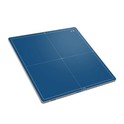
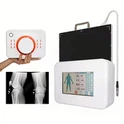
A flat panel detector (FPD) is a digital imaging device that converts X-ray photons into electronic signals, which are then processed into high-resolution digital images. Unlike traditional film systems, FPDs allow radiologists and clinicians to view images instantly on a monitor, adjust image settings, and store them digitally for future reference.
FPDs are widely used in radiology, mammography, dental imaging, and fluoroscopy, and they are gradually replacing film and computed radiography (CR) plates.
Types of Flat Panel Detectors
FPDs can be classified into two main categories depending on how they capture and convert X-ray signals:
| Type | How It Works | Common Materials |
|---|---|---|
| Direct Conversion | Converts X-ray photons directly into electrical charges, without an intermediate light step. This minimizes signal loss and provides sharper images. | Amorphous selenium (a-Se), cadmium telluride |
| Indirect Conversion | First converts X-rays into visible light using a scintillator, then the light is converted into electrical signals by photodiodes and read out by a TFT array. | Cesium iodide (CsI), gadolinium oxysulfide (GOS) |
Other detector technologies include CMOS-based and CCD-based systems, which are also used in specific imaging applications where portability, cost, or ultra-high resolution is required.

How Does a Flat Panel Detector Work?
Indirect Conversion Process
X-rays pass through the patient and strike the scintillator layer.
The scintillator converts X-ray photons into visible light.
Photodiodes capture the light and convert it into electrical charges.
A thin-film transistor (TFT) array reads out the charges.
The signals are digitized to form the final image.
Direct Conversion Process
X-rays interact directly with the photoconductor layer (such as amorphous selenium).
The material generates electron-hole pairs under the influence of X-rays.
Electrodes collect the charges and send them to the TFT array.
The data is digitized to produce the image.
Direct vs. Indirect Conversion: A Comparison
| Feature | Direct Conversion | Indirect Conversion |
|---|---|---|
| Spatial Resolution | Higher, due to no light scattering | Slightly lower, but improved with structured CsI scintillators |
| Sensitivity | May be less efficient with higher-energy X-rays | Very efficient due to thick scintillators |
| Noise | Lower noise, excellent contrast | Slightly higher noise due to light conversion |
| Cost | More expensive to manufacture | Lower cost, more widely used |
| Applications | Mammography, high-detail imaging | General radiography, chest, bone exams |
Key Benefits of Flat Panel Detectors
Fast Image Acquisition – Digital images are available instantly, improving workflow efficiency.
Lower Radiation Dose – Higher sensitivity allows clinicians to use lower X-ray doses.
High Image Quality – Superior resolution and contrast help detect small fractures, lesions, or subtle pathology.
Digital Flexibility – Images can be enhanced, zoomed, and shared electronically.
Efficient Storage – Seamless integration with PACS (Picture Archiving and Communication Systems).
Eco-Friendly – No chemical processing or film, reducing environmental waste.
Limitations of Flat Panel Detectors
High Initial Cost – Purchasing and maintaining FPD systems requires significant investment.
Fragility – Panels are sensitive to damage and costly to replace if broken.
Performance in Certain Conditions – Efficiency may decrease with very high-energy X-rays or thick body parts.
Training Needs – Radiographers must learn to optimize digital image settings.
Applications of Flat Panel Detectors
FPDs are now essential in a wide range of medical and industrial applications, such as:
Chest and skeletal X-rays
Mammography for early breast cancer detection
Dental imaging systems
Fluoroscopy and real-time surgical guidance
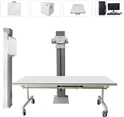
Portable and mobile X-ray units for ICU, emergency, or field use
Industrial nondestructive testing and security scanning
Conclusion
Flat panel detectors are the backbone of modern digital radiography. They offer faster imaging, higher resolution, reduced radiation exposure, and seamless digital integration compared to traditional X-ray systems. While the initial investment is higher, the long-term benefits in efficiency, diagnostic accuracy, and patient safety make FPDs an indispensable technology in today's healthcare landscape.
Frequently Asked Questions (FAQ)
1. What is the main function of a flat panel detector?
A flat panel detector converts X-ray photons into digital signals, producing high-quality medical images almost instantly. It replaces film in digital radiography systems and allows real-time viewing and image enhancement.
2. What is the difference between direct and indirect flat panel detectors?
Direct detectors convert X-ray photons directly into electrical charges, resulting in higher resolution. Indirect detectors first convert X-rays into light through a scintillator before turning them into electrical signals, which may slightly reduce resolution but improve sensitivity.
3. Are flat panel detectors safer for patients?
Yes. Because they are highly sensitive, FPDs require less radiation to generate clear images, which helps reduce patient exposure while maintaining diagnostic accuracy.
4. Where are flat panel detectors used in healthcare?
They are widely used in chest X-rays, bone imaging, mammography, dental radiography, fluoroscopy, and mobile/portable X-ray systems.
5. What are the advantages of digital X-ray over traditional film?
Digital systems with FPDs offer faster imaging, lower radiation dose, eco-friendly workflow (no films or chemicals), easier storage via PACS, and better diagnostic flexibility through digital image processing.
6. How long do flat panel detectors last?
With proper care, FPDs can last many years. However, they are sensitive devices, and physical damage or exposure to excessive moisture can shorten their lifespan.
7. Why are flat panel detectors more expensive?
They use advanced materials and electronics to achieve high image quality and sensitivity. Although the upfront cost is high, they save money over time by eliminating film, chemicals, and physical storage needs.