
what do radiologist wear to protect themselves
Radiologists work in environments where radiation exposure is a constant concern. They rely on specialized protective wear to shield themselves from harmful effects. This protective gear is crucial for their safety and long-term health.
Lead aprons are a staple in radiology, providing a barrier against radiation. These aprons are made from lead-impregnated materials, effectively blocking harmful rays. Radiologists also use thyroid shields to protect their sensitive thyroid glands.
Eye protection is another priority. Lead glasses help reduce the risk of cataracts by shielding the eyes. Additionally, lead gloves are essential when hands are near radiation sources.
Radiology protective equipment is not just about safety; it's about comfort and functionality. Advances in technology continue to improve these protective measures, ensuring radiologists can work safely and efficiently.
Why Radiologists Need Protective Wear
Radiologists face daily exposure to ionizing radiation, which can be harmful over time. This makes protective wear essential in their profession. Without protection, their health could be at serious risk.
Radiation exposure increases the risk of developing cancer and other health issues. Long-term exposure is particularly concerning. Protective measures help mitigate these risks substantially.
Radiology protective equipment, therefore, becomes a necessary shield against potential harm. The gear includes items like:
Lead aprons
Thyroid shields
Lead glasses
Each piece serves a specific function, ensuring comprehensive coverage.
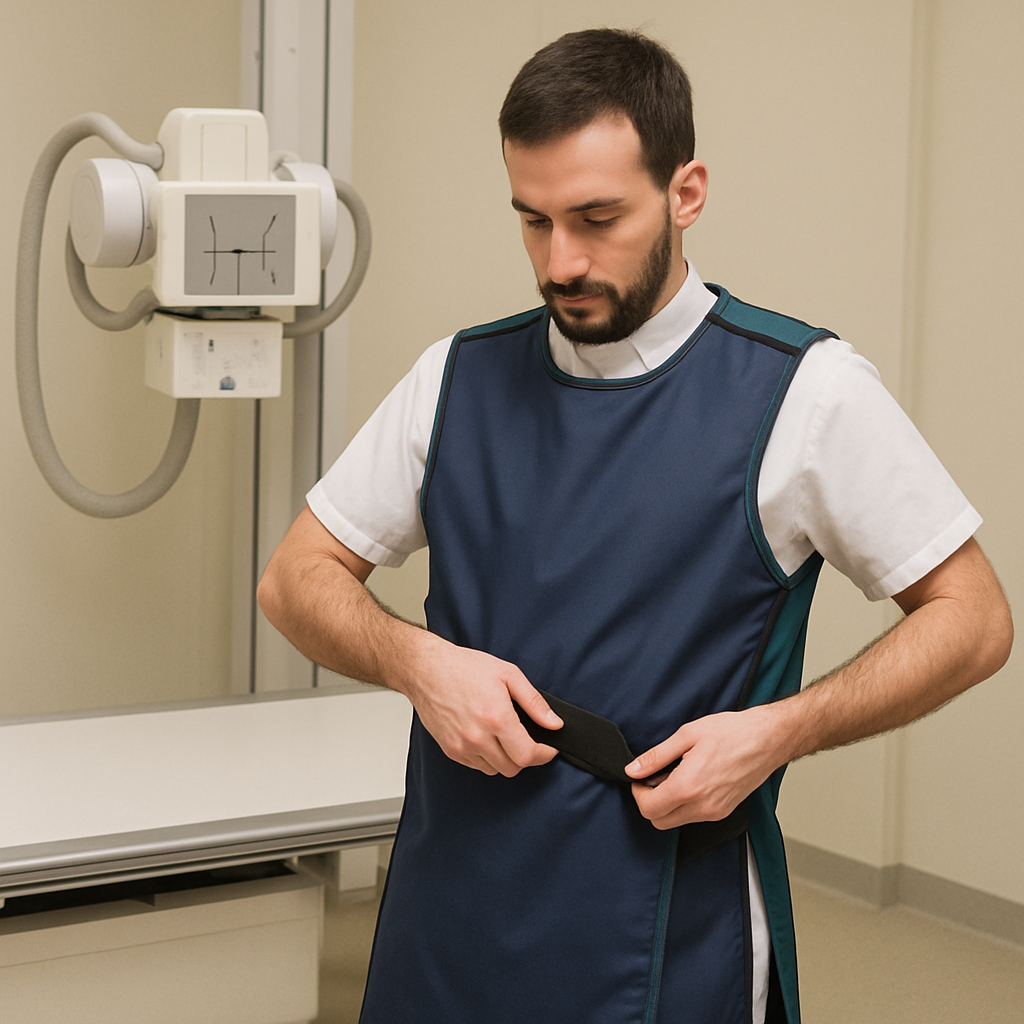
Key Types of Radiologist Protective Wear
Radiologists rely on various protective gear to safeguard themselves from radiation. Each piece of equipment is designed to offer specific protection.
The key types include lead aprons, thyroid shields, glasses, gloves, and protective barriers. This selection ensures comprehensive coverage from head to toe. These items work together to mitigate the harmful effects of radiation, preserving the health of radiology professionals.
Lead Aprons in Radiology
Lead aprons are fundamental in radiology protective equipment. They are typically made from lead-impregnated vinyl or rubber, providing substantial radiation shielding. Radiologists wear these aprons over their clothes, covering from the neck to the knees.
The effectiveness of lead aprons is measured in lead equivalency, ensuring proper shielding. They come in various styles, including wrap-around and vest-skirt combinations. These styles cater to different preferences and work requirements.
Proper storage is crucial for maintaining their condition. Lead aprons should be hung properly to avoid creasing and cracking, prolonging their lifespan. Maintenance also includes regular inspections for any damage.
Investing in quality lead aprons is essential as they are a critical part of a radiologist's safety gear.
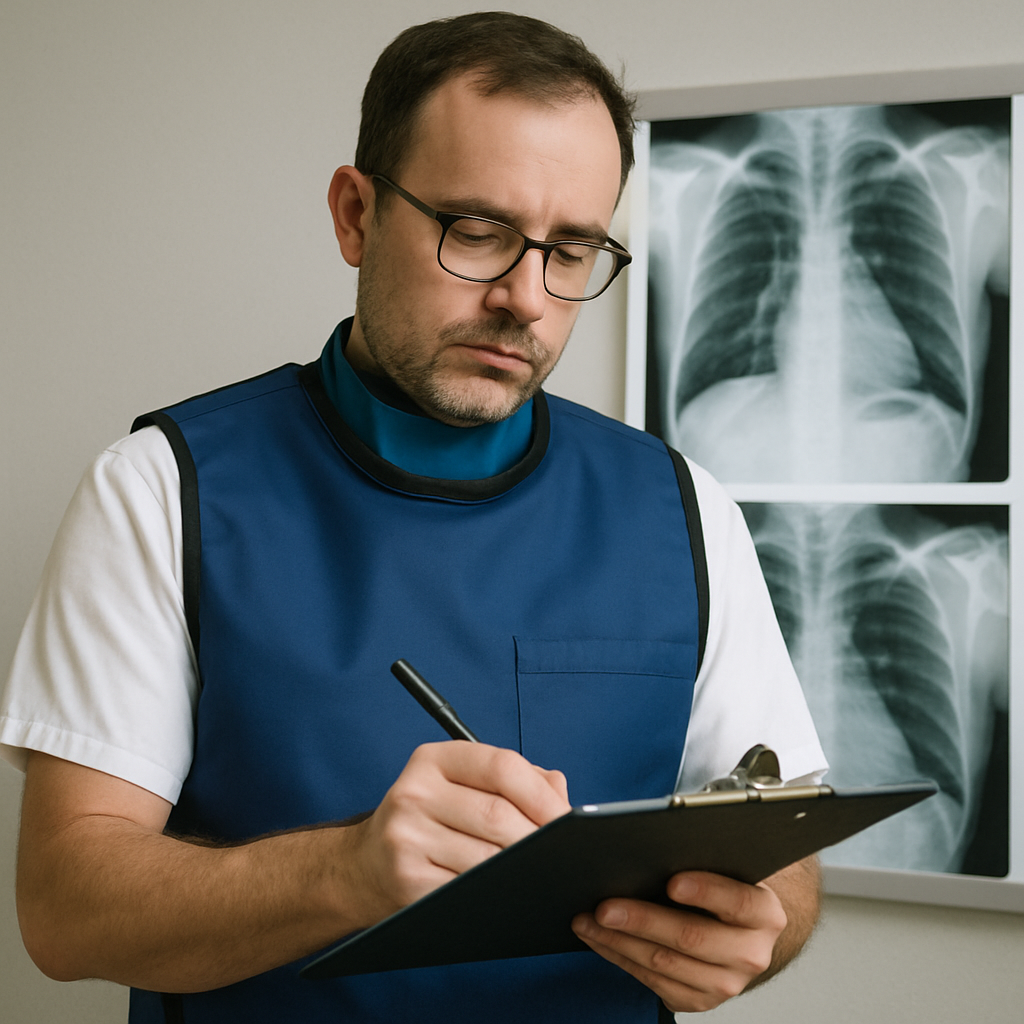
Thyroid Shields and Collars
Thyroid shields offer vital protection for the neck area. This region houses the sensitive thyroid gland, which is susceptible to radiation. Shields are usually worn with lead aprons, providing additional coverage.
These collars are crucial because the thyroid is highly sensitive to radiation. Thyroid shields significantly reduce the risk of thyroid cancer. They are often adjustable to ensure a snug fit for different individuals, enhancing comfort and safety.
Lead Glasses for Eye Protection
Radiologists also use lead glasses to protect their eyes. These glasses are designed to reduce the risk of cataracts caused by radiation exposure. They fit comfortably over regular eyewear, if necessary.
Lead glasses safeguard one of the most vulnerable body areas, the eyes. With their lightweight design, they do not compromise comfort during long procedures. They are a crucial part of a radiologist's protective arsenal.

Lead Gloves and Hand Protection
Lead gloves are essential when hands are near radiation sources. These gloves prevent radiation from reaching the skin and bones of the hands. Their use is critical during specific procedures.
They are crafted from lead-infused materials, ensuring effective protection while maintaining dexterity. This is important for tasks requiring precision. Regular checks for wear and tear help ensure their continued effectiveness.
Barriers and Mobile Shields
In radiology rooms, protective barriers and mobile shields play a vital role. These lead-lined walls or mobile units provide additional protection. They form a physical barrier between the radiation source and personnel.
Barriers are:
Stationary or movable
Essential for high-exposure areas
Adaptable to various room configurations
These shields are crucial during imaging procedures, ensuring safety without restricting mobility.

Additional Radiology Protective Equipment
Beyond basic protective wear, radiologists use other equipment to enhance safety. These devices help monitor and manage radiation exposure more effectively.
Some crucial tools include:
Dosimeters
Radiation detectors
Portable shielding devices
These items complement the primary gear, ensuring comprehensive safety coverage. By incorporating additional radiology protective equipment, professionals can better prevent exposure risks.
Dosimeters and Monitoring Devices
Dosimeters are vital for tracking radiation levels. Radiologists wear them to monitor accumulated exposure over time. These devices provide real-time data, alerting users to high radiation levels.
Ensuring proper usage and regular calibration of dosimeters maximizes their effectiveness. This proactive approach to monitoring makes a significant difference in maintaining health safety.
Maintenance and Care of Protective Wear
Proper maintenance of protective wear is essential for safety. Regular checks ensure gear provides maximum protection.
Key maintenance tasks include:
Inspecting for cracks or tears
Cleaning with mild soap
Storing flat or on hangers
Frequent evaluations prevent damage and extend the lifespan of the equipment. Radiologists should be diligent in caring for their protective wear to maintain its effectiveness.

Regulations and Training for Radiology Safety
Radiologists must adhere to strict regulations for safety. These guidelines ensure both patient and staff protection.
Training on protective gear usage is crucial. Radiologists receive updates on the latest safety protocols. Proper education reduces risks associated with radiation exposure and promotes a safer working environment.
Innovations and Future Trends in Radiology Protective Equipment
The development of radiology protective equipment continues to advance. Lightweight materials are making gear more comfortable.
Innovative designs aim to improve both protection and mobility for radiologists. As technology evolves, the focus is on optimizing safety without compromising usability. Future innovations promise even greater advancements in radiation shielding.
Conclusion: The Importance of Radiologist Protective Wear
Radiologist protective wear is vital for safety. It shields against harmful radiation, reducing long-term health risks such as cancer.
Wearing appropriate protective gear protects not only radiologists but also their colleagues and patients in the radiology department. Investing in quality protective equipment is essential. It represents a commitment to maintaining a safe working environment and ensuring the well-being of medical professionals.