
How to Choose Between X-ray, CT, and MRI?
In the world of modern medicine, diagnostic imaging plays a pivotal role in identifying health issues, guiding treatments, and improving patient outcomes. When faced with symptoms like persistent pain, injuries, or unexplained abnormalities, doctors often turn to imaging technologies such as X-rays, computed tomography (CT) scans, and magnetic resonance imaging (MRI). But with so many options available, how do you know which one is right for your situation? This comprehensive guide will break down the differences between X-ray, CT, and MRI, highlighting their strengths, limitations, and ideal applications to help you make an informed decision. Whether you're a patient preparing for a scan or a healthcare professional advising on diagnostics, understanding these tools can demystify the process and ensure the most effective imaging choice.
Medical imaging has evolved dramatically since the discovery of X-rays in 1895 by Wilhelm Conrad Roentgen. Today, these technologies allow us to peer inside the body without invasive procedures, detecting everything from broken bones to tumors. However, not all imaging methods are created equal. Factors like radiation exposure, cost, scan duration, and the type of tissue being examined all influence the choice. By the end of this article, you'll have a clear framework for choosing between X-ray, CT, and MRI, backed by expert insights and practical advice.

Understanding X-ray Imaging
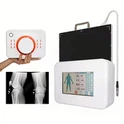
X-rays are the oldest and most commonly used form of medical imaging. They work by passing a controlled beam of ionizing radiation through the body. Dense tissues like bones absorb more radiation and appear white on the resulting image, while softer tissues like muscles or lungs allow more radiation to pass through, appearing darker. This creates a two-dimensional (2D) shadow-like picture that's quick and straightforward to interpret.
Advantages of X-rays
One of the primary benefits of X-rays is their speed and accessibility. A typical X-ray takes just a few minutes to complete, making it ideal for emergency settings where rapid diagnosis is crucial, such as in trauma cases involving suspected fractures. They're also cost-effective, often ranging from $100 to $500 depending on the location and facility, which makes them a first-line option for many routine checks.
X-rays excel at visualizing dense structures. For instance, they're unparalleled for detecting bone fractures, dental issues, or chest conditions like pneumonia. According to sources from Johns Hopkins Medicine, X-rays are particularly useful in orthopedics and pulmonology due to their ability to highlight bone alignment and lung abnormalities with minimal preparation.
Disadvantages of X-rays
Despite their utility, X-rays have limitations. They use ionizing radiation, which, while minimal in a single scan (equivalent to a few days of natural background radiation), can accumulate with repeated exposure, potentially increasing cancer risk over time. They're also less effective for soft tissue imaging, as muscles, organs, and nerves don't contrast well in 2D images. This means X-rays might miss subtle issues like ligament tears or early-stage tumors.
Additionally, X-rays provide only flat, 2D views, which can overlap structures and obscure details. Pregnant women are often advised to avoid them unless absolutely necessary due to fetal risks.
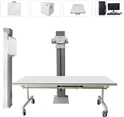
[Insert Image: A standard X-ray machine in a clinical setting, showing a patient positioned for a chest X-ray. Source: Free stock image from Pexels.]

Exploring CT Scans
Computed tomography, or CT scans (also known as CAT scans), represent a significant advancement over traditional X-rays. Invented in the 1970s, CT uses a rotating X-ray tube and detectors to capture multiple cross-sectional images (slices) of the body. A computer then reconstructs these into detailed 3D models, offering a more comprehensive view.
Advantages of CT Scans
CT scans provide high-resolution images that surpass X-rays in detail, especially for internal organs, blood vessels, and bones. They're fast-often completed in under a minute-which is why they're preferred in emergencies like head injuries or internal bleeding. As noted by Memorial Sloan Kettering Cancer Center, CT is excellent for detecting tumors, infections, and vascular issues because it can highlight density differences with precision.
Another plus is versatility. CT can be enhanced with contrast dyes (iodine-based) to better visualize blood flow or organ function, making it invaluable for abdominal scans or cancer staging. Costs typically range from $300 to $3,000, but the diagnostic accuracy often justifies the expense.
Disadvantages of CT Scans
Like X-rays, CT scans involve ionizing radiation-about 100 to 500 times more than a single X-ray-raising concerns for frequent use, especially in children or young adults. The American College of Radiology recommends weighing benefits against risks, particularly for non-urgent cases.
CT scans are also more expensive and less accessible in rural areas. Patients with allergies to contrast agents may experience reactions, and the procedure requires lying still in a narrow tube, which can be uncomfortable for claustrophobic individuals.
[Insert Image: A CT scanner machine with a patient sliding into the doughnut-shaped gantry. Source: Free stock image from Pexels.]
Delving into MRI Scans
Magnetic resonance imaging (MRI) stands apart from X-rays and CT by using powerful magnets, radio waves, and a computer to generate detailed images. Developed in the 1980s, MRI doesn't rely on radiation; instead, it aligns hydrogen atoms in the body's water molecules and measures their signals to create multi-planar (axial, sagittal, coronal) views.
Advantages of MRI
MRI's biggest strength is its superior soft tissue contrast. It's the gold standard for imaging the brain, spinal cord, joints, and muscles, revealing details that X-rays and CT might miss, such as multiple sclerosis plaques or rotator cuff tears. As explained by Envision Radiology, MRI is radiation-free, making it safer for repeated scans, pregnant women (after the first trimester), and children.
The technology also allows for functional imaging, like assessing blood flow or brain activity, without invasive procedures. Scans can take 15 to 90 minutes but provide unparalleled 3D clarity.
Disadvantages of MRI
MRI is time-consuming and noisy (due to the machine's banging sounds), which can be distressing. It's the most expensive option, often costing $1,000 to $5,000, and not always covered by insurance for non-essential uses. Patients with metal implants, pacemakers, or claustrophobia may not be candidates, as the strong magnets can interfere or cause discomfort.
Availability is another issue; MRI machines are large and require specialized rooms, limiting their presence in smaller clinics.
[Insert Image: An MRI machine tunnel with a patient lying on the table, ready for scanning. Source: Free stock image from Pexels.]
Key Differences: A Side-by-Side Comparison
To make the choice clearer, here's a comparison table summarizing the core aspects of X-ray, CT, and MRI:
| Aspect | X-ray | CT Scan | MRI |
|---|---|---|---|
| Technology | Ionizing radiation (X-ray beams) | Rotating X-rays and computer reconstruction | Magnets and radio waves |
| Best For | Bones, chest, teeth | Organs, tumors, emergencies | Soft tissues, brain, joints |
| Radiation | Low | Moderate to high | None |
| Scan Time | Seconds to minutes | 1-5 minutes | 15-90 minutes |
| Cost | Low ($100-$500) | Medium ($300-$3,000) | High ($1,000-$5,000) |
| Image Detail | 2D, basic | 3D, detailed | 3D, highly detailed |
| Risks | Cumulative radiation | Higher radiation, contrast allergies | Claustrophobia, metal incompatibility |
| Availability | Widespread | Common in hospitals | Specialized facilities |
This table, drawn from insights across sources like Hopkins Medicine and MSKCC, illustrates how each modality fits different needs. For example, if speed and cost are priorities, X-ray wins; for detailed soft tissue analysis, MRI is superior.

Factors to Consider When Choosing the Right Imaging
Selecting between X-ray, CT, and MRI isn't one-size-fits-all. Here are key factors to evaluate:
Type of Condition: Bone-related? Start with X-ray. Soft tissue or neurological? Opt for MRI. Complex internal views? CT is often best.
Radiation Concerns: If you're pregnant, young, or need frequent imaging, avoid X-ray and CT in favor of MRI or ultrasound alternatives.
Urgency: Emergencies demand quick results-CT or X-ray prevail here, as per UVA Radiology guidelines.
Cost and Insurance: Check coverage; X-rays are usually the most affordable.
Patient Comfort and Contraindications: Claustrophobia might rule out MRI or CT; metal in the body definitely excludes MRI.
Diagnostic Accuracy Needed: For subtle issues, MRI's detail is unmatched, while CT suffices for many internal scans.
Consulting your doctor is essential-they'll consider your medical history and symptoms to recommend the optimal test.
Common Scenarios: When to Use Each
Fractures or Joint Pain: X-ray first to rule out breaks; if negative, MRI for ligaments.
Headaches or Neurological Symptoms: MRI for brain detail; CT for quick bleed detection.
Abdominal Pain: CT to visualize organs and detect appendicitis or stones.
Cancer Screening: CT for staging; MRI for precise tumor mapping.
Chest Issues: X-ray for initial pneumonia check; CT for detailed lung views.
These examples, supported by OrthoInfo from the American Academy of Orthopaedic Surgeons, show how context drives the choice.
Potential Risks and Safety Measures
All imaging carries some risks, but they're generally low. X-rays and CT involve radiation, so minimize unnecessary scans. MRI is safer but requires screening for implants. Always inform your provider of allergies or pregnancy.
Advancements like low-dose CT and faster MRI are reducing risks, as highlighted in FDA resources on medical X-ray imaging.
Conclusion: Empowering Your Imaging Decision
Choosing between X-ray, CT, and MRI boils down to balancing speed, detail, safety, and cost with your specific health needs. X-rays offer quick, affordable bone views; CT provides fast, detailed 3D images for emergencies; and MRI delivers radiation-free, high-contrast soft tissue insights. By understanding these differences, you can engage more effectively with your healthcare team and advocate for the best diagnostic path.
Remember, imaging is a tool-not a diagnosis. Follow up with your doctor for interpretation. If you're facing a scan soon, discuss options openly to ensure the choice aligns with your comfort and condition.
FAQ
1. Is MRI better than CT?
It depends-MRI is superior for soft tissues, while CT is faster and better for bones or emergencies.
2. Does CT use more radiation than X-ray?
Yes, significantly more, but it's controlled and justified for detailed imaging.
3. Can I have an MRI with metal in my body?
Usually no, due to magnetic interference-always disclose implants.
4. How long does each scan take?
X-ray: minutes; CT: 1-5 minutes; MRI: up to an hour.
5. Are there alternatives to these scans?
Yes, ultrasound or PET scans for specific cases, avoiding radiation altogether