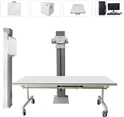

X-Rays Decoded: The Safe, Smart Way Doctors See Inside You
Introduction: More Than Just "Taking a Picture"
We've all been there – sitting in a chilly hospital gown, waiting for that "click" during an X-ray or CT scan. These moments represent one of medicine's quiet revolutions: the ability to see through skin and bone without a single incision. Yet despite their ubiquity, medical imaging remains shrouded in myths. Let's pull back the curtain on how X-rays truly work, why modern doses are safer than ever, and how to navigate your next scan with confidence.
1. X-Rays: Humanity's Accidental Superpower
In 1895, German physicist Wilhelm Röntgen made a discovery while experimenting with cathode rays:
The "Eureka" moment: He noticed a fluorescent screen glowing across the room from his apparatus
The first human image: His wife Bertha's hand bones and wedding ring – captured on glass plate
Why "X"? Röntgen called it X-strahlen ("unknown rays") – a name that stuck globally
What few know: Within a year of Röntgen's publication:
Battlefield surgeons used mobile X-ray units to locate bullets in wounded soldiers
Shoe stores offered "foot-o-scopes" (later banned for unnecessary radiation exposure)
Thomas Edison abandoned X-ray research after his assistant developed radiation burns
2. Your Body Through the X-Ray Lens: More Than Broken Bones
Modern applications go far beyond skeletal snapshots:
| Technology | What It Reveals | Radiation Level |
|---|---|---|
| Digital X-ray (DR) | Fractures, pneumonia, swallowed objects | Very low (0.01-0.1 mSv) |
| Mammography | Micro-calcifications signaling early breast cancer | 0.4 mSv (≈ 7 wk natural) |
| CT Scan | 3D views of organs, tumors, vascular blockages | 2-10 mSv (site-dependent) |
| Fluoroscopy | Real-time movement (swallowing studies, catheter guidance) | Higher (monitored closely) |
| Radiation Therapy | Targeted cancer cell destruction | Very high (controlled) |
Surprising uses:
Art authentication: Detecting hidden layers in paintings
Archaeology: Reading sealed scrolls from Pompeii
Airport security: But medical scanners use millimeter waves (non-ionizing)
3. Radiation Demystified: Your Questions Answered
Q: "Will I glow after my scan?"
A hospital physicist's response:
"X-rays work like a camera flash – they pass through you momentarily and vanish. You don't retain radiation any more than you 'hold onto' light after turning off a lamp."
The Dose Reality Check:
Chest X-ray (0.1 mSv) =
10 days in Denver (higher altitude = more cosmic rays)
One round-trip flight NYC→Tokyo
Annual natural exposure (US avg): 3 mSv
Regulatory annual limit for radiation workers: 50 mSv
When Risks Are Real:
Repeated high-dose scans (e.g., multiple full-body CTs yearly)
Children's developing tissues (pediatric protocols use 50% less dose)
Pregnancy (first trimester most sensitive)
4. Safety Engineered Into Every Scan
Modern machines incorporate 7 layers of protection:
Collimation: Tight beam targeting only necessary areas
Pulsed fluoroscopy: Reduces live X-ray "movie" dose by 90% vs older continuous modes
Iterative reconstruction (CT): AI-enhanced software cuts doses 40-60%
Automated exposure control: Adjusts power based on body thickness
Lead shielding: Customizable aprons (thyroid, gonads, eyes)
Room design: Barium-lined walls contain scatter radiation
ALARA culture: "As Low As Reasonably Achievable" is law in radiology departments
Real-world example:
At Boston Children's Hospital, a toddler's CT dose equals <1/5th of 1970s levels – with 8x sharper images.
5. Your Imaging Prep Guide: From Clothing to Claustrophobia
Before Appointment
Metal removal: Zippers ≠ just inconvenience – a bra underwire can mimic a lung nodule!
Clothing hacks: Wear sweatpants + sports bra (no metal) to avoid paper gowns
Contrast prep:
Oral contrast: Starts 90 mins prior (chalky but crucial for abdominal clarity)
IV contrast: Requires kidney function test if diabetic or >60 yrs old
Claustrophobia solutions:
Open MRI for non-X-ray scans
Anti-anxiety meds (arrange driver) for conventional MRI
During the Scan
Stillness matters: Even breathing motion blurs images – practice breath-holds
Speak up: Need a pillow? Cold? Tell the tech!
Pediatric tip: Have kids practice "playing statue" with rewards
After Exposure
Hydration: Flushes IV contrast (if used) – aim for 8 glasses in 24hrs
Breastfeeding safety: Safe after X-rays/CTs (contrast agents ≠ radioactive)
Myth-busting: No evidence that antioxidants (green tea/tomatoes) aid recovery – but won't hurt!
6. Special Scenarios: Pregnancy, Kids & Frequent Scans
Pregnancy Protocol
Golden rule: No abdominal X-ray/CT in first trimester unless lifesaving
If unavoidable:
Double-layer lead apron over abdomen
Lowest possible pulse-count fluoroscopy
Fetal dose kept <1 mSv (proven safe threshold)
Alternatives: Ultrasound (zero radiation) or shielded MRI
Children's Unique Needs
Size-based dosing: Machines auto-adjust for weight – ask if they use pediatric presets
Immobilization: "Papa Bear hugs" (lead-coated parent holds child) reduce re-scans
Distraction: MRI-compatible VR goggles cut sedation needs by 30%
Frequent Flyers (Chronic Condition Monitoring)
Dose tracking: Ensure hospital uses Radiology Information Systems logging lifetime exposure
Advocate for alternatives:
Crohn's disease → MR enterography over CT
Lung nodule follow-up → Low-dose CT protocols
Orthopedic healing → Ultrasound if possible
7. The Future Is Clearer (and Safer)
Innovations transforming the field:
Photon-counting CT: 50% less dose + microscopic detail
AI triage: Algorithms flag urgent findings (pneumonia/pneumothorax) in <90 seconds
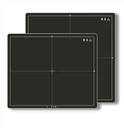
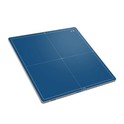
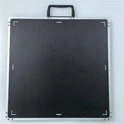
Mobile DR: Handheld units for ICU bedsides (dose = 1/10th conventional)
Terahertz imaging: Experimental non-ionizing tech seeing through skin
Why YSNMED Invests in Safety
As a global medical imaging partner since 2006:
Our Congo project (125+ units) featured lead-shielded rooms meeting IAEA standards
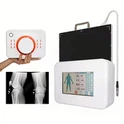
2023 DR systems include real-time dose displays – empowering patients to ask: "Can we go lower?"
Training programs teach "ALARA culture" in 12 languages across 88 countries
"Seeing a radiographer adjust settings to protect a child reminds me this isn't just engineering – it's ethics made visible."
– Dr. Lena Wu, YSENMED Lead Medical Physicist
Key Takeaways for Empowered Patients:
Radiation ≠ radioactivity – Scans leave nothing behind
Dose is relative – A CT's 10 mSv < smoking's 53 mSv/year risk
Speak up – Ask: "Is shielding possible?" or "Is there a lower-dose option?"
Tech evolves – Today's scans use fractions of historical doses
Risk vs. benefit – An undiagnosed condition often outweighs scan risks