
What Are the Different Types of Ultrasound Machines, Along with Their Uses and Applications?
Ultrasound machines are vital tools in modern medicine. They use high-frequency sound waves to create images of the body's interior.
These machines are essential for diagnosing and monitoring various medical conditions. They offer a non-invasive way to see inside the body without using radiation.
There are several types of ultrasound machines, each with unique features and applications. From portable devices to advanced 3D and 4D machines, the options are diverse.
Portable ultrasound machines are compact and versatile. They are ideal for use in emergency rooms and remote locations.
3D and 4D ultrasound machines provide detailed images, enhancing diagnostic accuracy. They are particularly useful in fields like obstetrics.
Doppler ultrasound machines measure blood flow, aiding in the diagnosis of vascular conditions. This capability is crucial for assessing heart and blood vessel health.
Ultrasound imaging is used across many medical specialties. It plays a key role in cardiology, obstetrics, and musculoskeletal imaging.
As technology advances, ultrasound machines continue to evolve. They are becoming more sophisticated, with enhanced imaging capabilities and new applications.
Understanding Ultrasound Technology: How Ultrasound Machines Work
Ultrasound technology is fascinating and complex. These machines rely on high-frequency sound waves. These waves penetrate the body to create images of internal structures.
The basic principle involves a transducer. This device emits sound waves that bounce back upon hitting tissues. These echoes are captured and converted into visual images.
Ultrasound imaging is distinct from other diagnostic tools. It doesn't use ionizing radiation, making it safer for patients. It's particularly beneficial for pregnant women and children.
The process begins when a gel is applied to the patient's skin. This gel facilitates sound wave transmission and improves image quality. The transducer then sends and receives the sound waves.
Various components of ultrasound machines work together. These include:
The control panel for settings and adjustments
A display screen for viewing images
Software for processing and analyzing data
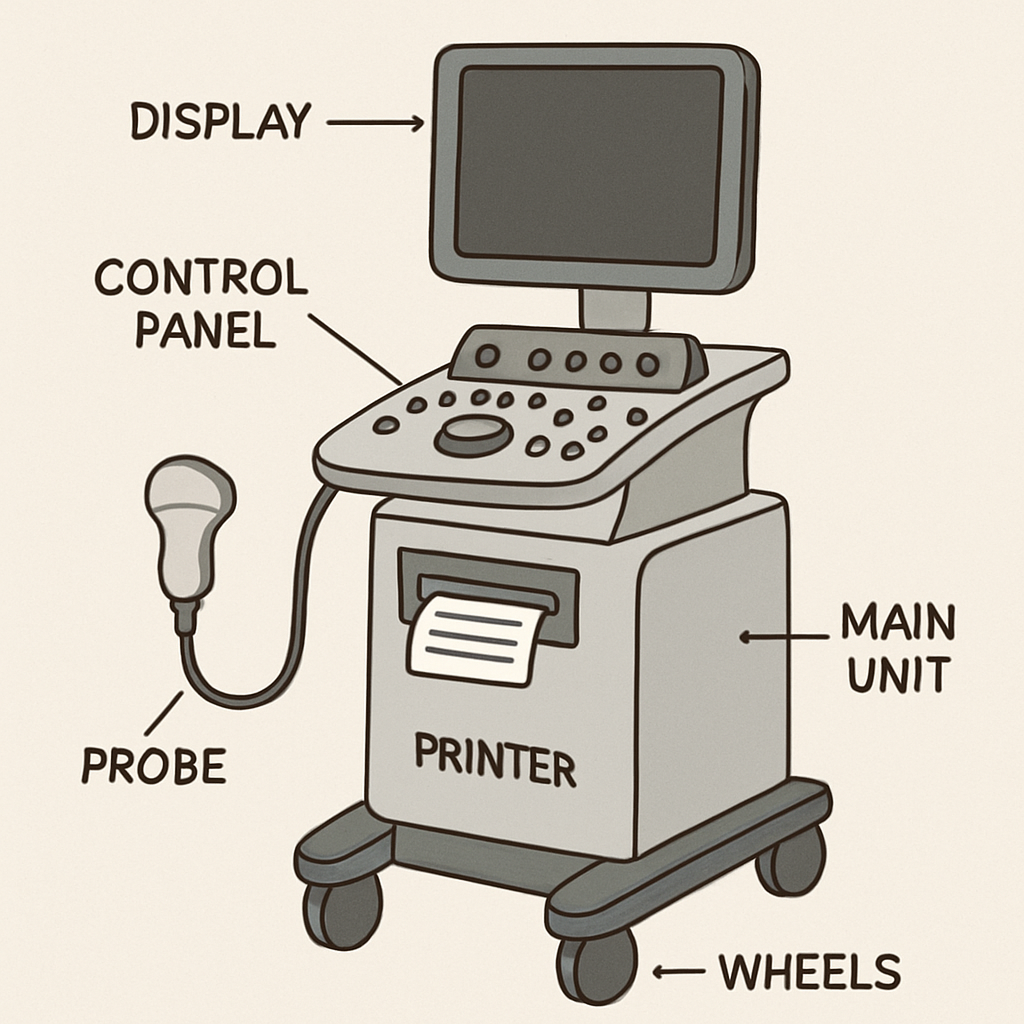
These machines require regular maintenance. Proper calibration ensures accurate image production. Trained operators must skillfully interpret the images for diagnosis. Understanding this technology is key to maximizing its diagnostic benefits.
Main Types of Ultrasound Machines
Ultrasound machines come in several forms, each tailored for specific purposes. Understanding these types is crucial for healthcare professionals. It aids in choosing the right device for clinical needs.
These machines vary greatly in their design and application. Some are compact and portable, while others are larger and more comprehensive.
Common types include:
Portable ultrasound machines
Cart-based ultrasound machines
Handheld and wireless devices
3D and 4D ultrasound machines
Doppler ultrasound machines
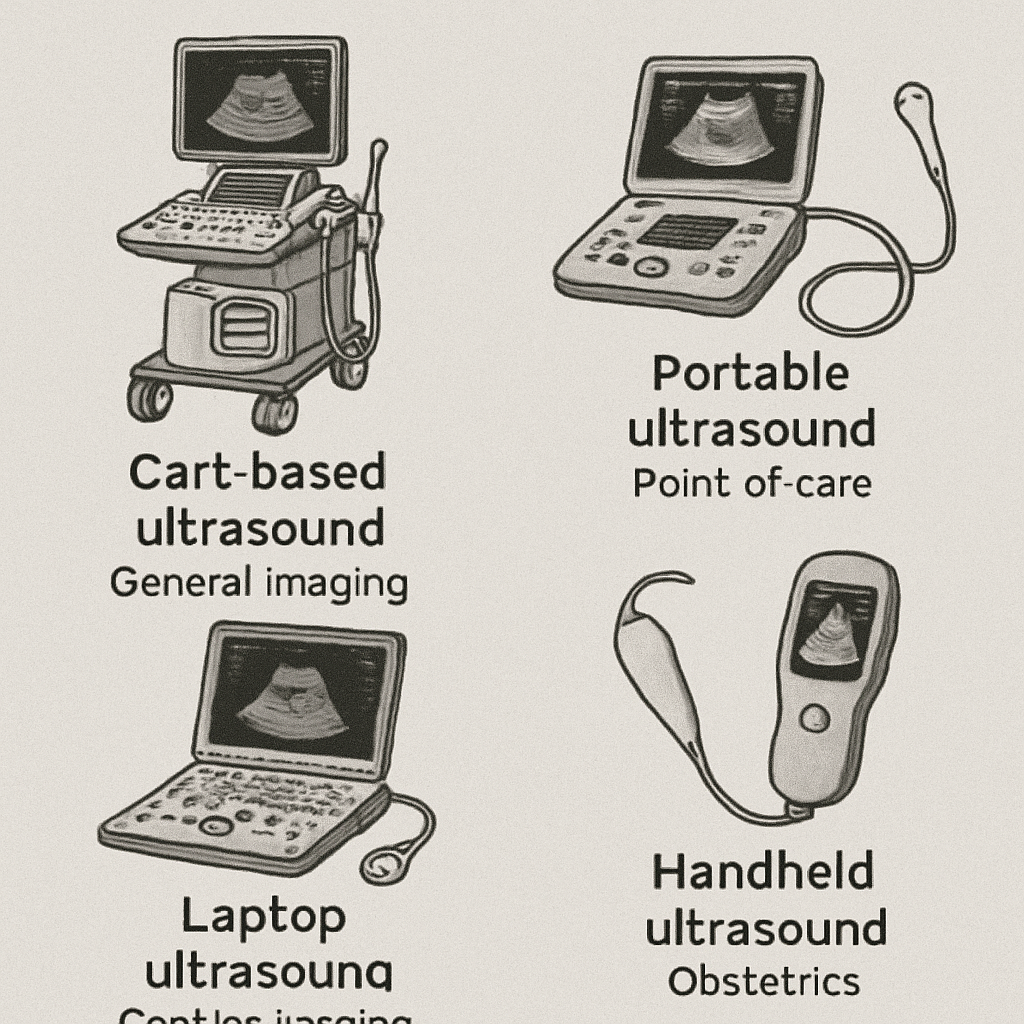
Each type has unique features and benefits. Their choice depends on the setting and desired application. With advances in technology, options continue to expand. This variety enhances versatility in medical imaging, improving patient outcomes.
Portable Ultrasound Machines
Portable ultrasound machines are revolutionizing healthcare. They are compact and easy to transport. Their convenience makes them ideal for use in diverse environments.
These devices are perfect for emergency rooms and remote clinics. They offer real-time imaging in situations where time is critical. Rapid assessments can greatly improve patient care in urgent circumstances.
Key advantages of portable ultrasound machines include:
Mobility and ease of transport
Quick setup and operation
Flexibility in various clinical settings
Cost-effectiveness compared to larger units

They are increasingly popular due to their versatility. Medical professionals can use them for quick diagnostics at the patient's bedside. Their use extends beyond hospitals to include ambulances and field settings.
Despite their small size, these machines provide high-quality images. They are equipped with advanced features, making them reliable diagnostic tools. The demand for portable solutions is growing, driving innovation in this field.
Cart-Based Ultrasound Machines
Cart-based ultrasound machines are a staple in many medical facilities. They offer comprehensive imaging solutions in a stable setup. Mounted on wheels, these machines provide a balance of mobility and functionality.
Their design supports a wide range of applications. Ideal for hospital departments, they often feature advanced imaging capabilities. From obstetrics to cardiology, these machines serve various specialties.
Key attributes include:
Enhanced imaging features
Built-in storage for accessories
Versatile use in multiple specialties
Adjustable components for ergonomic use

Their structure allows for easy integration into clinical workflows. They enable detailed examinations without sacrificing image quality. While less portable than handheld devices, they offer superior performance.
These machines support complex diagnostic needs. Thus, they are favored in tertiary care and teaching hospitals. With continual updates, their technology remains at the forefront of medical imaging.
Handheld and Wireless Ultrasound Devices
Handheld and wireless ultrasound devices epitomize modern imaging convenience. These compact devices fit in the palm of a hand, offering unparalleled portability.
Designed for ease, they enable quick scanning procedures. They are particularly beneficial in remote or challenging environments. As technology advances, their capabilities continue to grow.
Benefits of handheld and wireless ultrasound devices are:
Extreme portability and ease of use
Quick start-up times for immediate scans
Compatibility with smartphones and tablets
Affordable options for budget-conscious practices

They are ideal for first responders and mobile healthcare providers. Their adaptability allows for patient care beyond traditional settings. Despite their size, they deliver respectable image quality for point-of-care diagnostics.
Ongoing innovations are enhancing these devices' function and scope. The integration of wireless technology is expanding diagnostic capabilities in the field. As a result, they are becoming a valuable asset in telemedicine.
3D and 4D Ultrasound Machines
3D and 4D ultrasound machines take imaging to the next level. By providing detailed views, they offer more comprehensive insights into bodily structures.
These machines are vital in fields like obstetrics, where visual detail is crucial. 3D ultrasound constructs detailed, static images. Meanwhile, 4D ultrasound adds a temporal element, creating dynamic, live images.
Features of 3D and 4D ultrasound machines include:
Enhanced visualization of organs and tissues
Real-time video imaging capabilities (4D)
Improved assessment of fetal development
Detailed anatomical views for surgical planning

Their precision is transforming prenatal care. Expectant parents can view clear, moving images of their unborn child. This technology also supports advanced diagnostic processes.
Beyond obstetrics, these machines benefit surgical and oncological imaging. Detailed visualization assists in treatment planning and evaluation. As demand grows, these machines continue to gain prominence across healthcare sectors.
Doppler Ultrasound Machines
Doppler ultrasound machines specialize in assessing blood flow. By measuring the speed and direction of blood flow, they provide crucial data. This helps in diagnosing vascular conditions and heart problems.
Their non-invasive nature makes them a preferred choice in many medical fields. They aid in evaluating conditions like deep vein thrombosis and arterial blockages.
Doppler ultrasound machine benefits include:
Precise measurement of blood flow dynamics
Identification of vascular obstructions
Evaluation of fetal blood circulation
Enhanced cardiac assessments

These machines are integral to cardiovascular diagnostics. They offer critical insights without invasive procedures, enhancing patient safety.
Versatile and effective, Doppler machines support varied medical applications. From cardiology to prenatal assessments, they are indispensable tools. As technology progresses, their role in medical diagnostics continues to expand.
Key Applications of Ultrasound Imaging in Medicine
Ultrasound imaging is a cornerstone of modern medical diagnostics. Its versatility allows it to be used across a wide range of medical fields. With no radiation involved, it offers a safe option for patient evaluations.
In obstetrics, ultrasound imaging is crucial. It monitors fetal development and assesses maternal health. The technology provides expectant parents with detailed images of their unborn child.
In cardiology, it plays a key role in examining heart structures. Ultrasound devices can detect heart valve issues and blood flow anomalies. Real-time imaging helps guide treatments and interventions.
Some significant applications of ultrasound imaging include:
Fetal development monitoring
Heart and blood vessel assessments
Liver and abdominal examinations
Musculoskeletal evaluations
Breast tissue scanning for anomalies

As technology advances, ultrasound's role in diagnostics continues to grow. With new applications, it is invaluable in both preventive and urgent care. Its real-time imaging capabilities make it a preferred first-line diagnostic tool.
Diagnostic Ultrasound in Different Medical Specialties
Diagnostic ultrasound serves various medical specialties. It provides unique insights into structures and functions of organs. This capability is instrumental in accurate diagnoses and treatment planning.
In emergency medicine, ultrasound imaging is often the first diagnostic step. It quickly assesses trauma and guides further interventions. This speed can be critical in life-saving situations.
In musculoskeletal medicine, ultrasound examines soft tissue injuries. It visualizes muscles, ligaments, and tendons, enhancing injury management. These evaluations help guide rehabilitation and treatment strategies.
Key specialties using diagnostic ultrasound include:
Obstetrics and gynecology
Cardiology
Emergency medicine
Musculoskeletal medicine
Gastroenterology and hepatology

In gastroenterology, ultrasound evaluates organs like the liver and pancreas. It can identify tumors, cysts, or other structural changes. These insights are crucial for formulating effective treatment plans.
Each specialty benefits from ultrasound's non-invasive nature. The precision and safety make it a staple in patient care. As technology evolves, its diagnostic contributions only become more important.
Therapeutic and Interventional Uses of Ultrasound
Therapeutic uses of ultrasound are expanding healthcare capabilities. Beyond diagnostics, ultrasounds also play a role in treatments. Their precision aids in delivering specific therapies effectively.
Guided procedures are a primary interventional use. Ultrasound assists in guiding needle aspirations and biopsies. This accuracy minimizes risks and improves outcomes.
Therapeutic and interventional applications include:
Needle-guided biopsies
Minimally invasive surgical guidance
Lithotripsy for kidney stones
Tumor ablation techniques

Interventional radiologists often rely on ultrasound devices. They help navigate complex anatomy during minimally invasive procedures. This reliance enhances the safety and efficacy of surgical interventions.
Therapeutic ultrasound is also used in pain management. It delivers targeted therapy, reducing inflammation and promoting healing. As research advances, new therapeutic applications continue to emerge.
Choosing the Right Ultrasound Machine: Factors to Consider
Choosing the best ultrasound machine requires careful consideration. The selection hinges on the clinical needs and application areas. Each machine's capabilities should align with the specific diagnostic tasks.
Key factors to consider include:
Image quality and resolution
Portability and ease of use
Compatibility with existing systems
Cost and maintenance requirements

The user's experience and training are critical. Machines should cater to the operator's skill level to ensure accurate use. Additionally, understanding available budget constraints can influence the decision-making process.
The healthcare setting is also a pivotal factor. Some environments benefit from portable ultrasounds, enhancing flexibility in patient care. Ultimately, the right choice leads to improved diagnostic efficacy and patient outcomes.
Advances in Ultrasound Technology and Future Trends
Ultrasound technology is rapidly evolving. Innovations enhance the precision and range of diagnostic capabilities. As a result, newer ultrasound machines offer better image quality and features.
Emerging trends include:
Integration with AI for enhanced image analysis
Wireless connectivity for telemedicine
Compact designs for improved portability

These advancements increase the applicability of ultrasound devices across various fields. AI integration assists in faster and more accurate diagnoses, which aids healthcare professionals significantly. Meanwhile, wireless capabilities facilitate easier use in remote or telehealth scenarios.
As these trends progress, the future of ultrasound services promises even more breakthroughs. Accessibility and effectiveness are anticipated to improve, helping medical providers deliver superior patient care. The ongoing innovation illustrates the transformative impact of ultrasound technology in medicine.
Conclusion: The Growing Role of Ultrasound Machines in Modern Healthcare
Ultrasound machines have become indispensable in contemporary medical practice. Their versatility in diagnostics and treatment makes them essential tools in healthcare.
These machines offer non-invasive, safe, and reliable imaging options. This makes ultrasound imaging a preferred choice in many diagnostic scenarios. Their wide range of applications covers various medical specialties, from obstetrics to cardiology.
As ultrasound technology continues to advance, its impact on patient care grows. New developments promise even greater precision and accessibility, enhancing healthcare outcomes. The future of ultrasound services appears promising, highlighting their vital role in modern medicine.