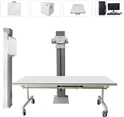

Introduction: The Digital Shift in Modern Radiology
The landscape of medical diagnosis has undergone a seismic shift over the last two decades, driven primarily by the evolution of Digital Radiography (DR). Gone are the days of chemical processing, darkrooms, and bulky film archives. Today, speed, precision, and efficiency are the cornerstones of radiological departments globally. At the heart of this transformation lies a critical piece of medical imaging equipment: the Flat Panel Detector (FPD).
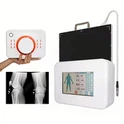
FPDs are the engine room of modern X-ray systems, converting X-ray photons into digital signals that create high-resolution images almost instantly. However, not all detectors are created equal. The market is flooded with options ranging from varying sensor technologies to different connectivity methods.
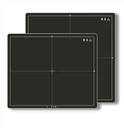
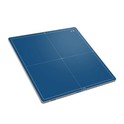
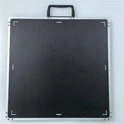
Enter the YSNFPD-V1717X. This innovative device represents a strategic convergence of proven technology and practical design. It is a wired, 17x17 inch X-ray detector utilizing Amorphous Silicon (a-Si) technology, packaged in a standard cassette-size housing. While the industry buzz often surrounds wireless technology, the YSNFPD-V1717X proves that wired solutions remain vital, offering unmatched reliability and speed for demanding clinical environments.
This article delves deep into the mechanics, benefits, and applications of the YSNFPD-V1717X, exploring how it redefines expectations for high-quality, cost-effective radiographic imaging.

Decoding the YSNFPD-V1717X: Design and Core Technology
To understand why the YSNFPD-V1717X is a preferred choice for many institutions, we must break down its core specifications and design philosophy. It is engineered to bridge the gap between traditional analog setups and fully integrated digital suites.
The "Cassette-Size" Advantage
One of the most significant barriers to adopting Digital Radiography (DR) is the cost of replacing existing analog X-ray machines. The YSNFPD-V1717X addresses this head-on with its ISO 4090 compliant "cassette-size" design.
This means the detector has the exact physical dimensions of a standard 17x17 inch film cassette. It can be effortlessly slipped into the existing Bucky tray of a radiographic table or wall stand without any mechanical modification to the X-ray generator or mechanical hardware. This capability makes it the ideal solution for retrofit digital radiography systems, allowing hospitals to upgrade to digital for a fraction of the cost of buying a new DR room.
The Power of Amorphous Silicon (a-Si) Detector Technology
The sensor technology within an FPD dictates its image quality and durability. The YSNFPD-V1717X utilizes an Amorphous Silicon (a-Si) detector with a Thin Film Transistor (TFT) array. While newer technologies like CMOS exist, a-Si remains the industry workhorse for several reasons crucial to high-volume radiology:
Radiation Hardness: a-Si is inherently resistant to radiation damage. Over years of use, all detectors degrade due to X-ray exposure, but a-Si sensors maintain their performance characteristics longer than many alternatives, ensuring a better return on investment.
Manufacturing Maturity: The production process for large-area a-Si panels is highly mature, resulting in excellent panel uniformity and a lower cost base compared to similar-sized CMOS detectors.
Thermal Stability: In environments with fluctuating temperatures, such as mobile clinics or busy emergency rooms, a-Si provides stable performance without requiring complex active cooling systems.

The Wired Connection: Why It Still Matters
In an era dominated by Wi-Fi and Bluetooth, choosing a "wired" device might seem counterintuitive. However, for mission-critical medical imaging equipment, a physical connection offers distinct advantages that wireless technology still struggles to match in certain scenarios.
The YSNFPD-V1717X uses a high-speed tethered connection for both data transfer and power supply.
1. Unmatched Data Transfer Speed and Reliability
Wireless signals in hospitals are notoriously unstable due to interference from thick walls, other medical devices, and high network traffic. A dropped connection during an X-ray exposure means the image is lost, and the patient must be irradiated again-a scenario unacceptable in modern healthcare.
The wired connection of the YSNFPD-V1717X ensures instantaneous, interference-free transmission of large raw image files. The full-resolution image appears on the acquisition workstation in seconds, guaranteeing streamlined workflows in high-patient-volume settings like trauma centers.
2. Zero "Battery Anxiety"
Wireless detectors rely on internal batteries that must be charged frequently. A dead battery stops workflow dead in its tracks. Because the YSNFPD-V1717X draws power directly through its tether cable, it is always ready. There is no need to manage charging schedules, swap battery packs, or worry about power failure during a critical procedure. This makes it exceptionally reliable for continuous, back-to-back imaging.
Achieving High-Resolution Medical Imaging at Low Dose
Ultimately, the goal of any radiographic system is diagnostic accuracy while ensuring patient safety. The YSNFPD-V1717X excels in providing High-Resolution Medical Imaging.
The device is typically paired with a high-performance scintillator layer, usually Cesium Iodide (CsI). The scintillator converts X-rays into visible light, which the a-Si photodiodes then capture. CsI grows in columnar structures that guide light straight down to the sensor pixel, minimizing light spread. This results in a high Modulation Transfer Function (MTF), meaning the detector can resolve very fine details, such as hairline fractures or early-stage lung nodules.
Furthermore, the efficient conversion of X-rays to digital signals means the detector has a high Detective Quantum Efficiency (DQE). A high DQE indicates that the detector needs fewer X-ray photons to create a high-quality image. This directly translates to the ability to perform Low Dose X-ray exams, adhering to the ALARA principle (As Low As Reasonably Achievable) to protect patients from unnecessary radiation exposure.

Applications and Future Outlook
The versatility of the 17x17 inch format makes the YSNFPD-V1717X suitable for a wide array of clinical applications. Its large field of view is perfect for chest and abdominal imaging, while its robust build allows it to handle general skeletal radiography ease.
While it is a wired system, it is still highly adaptable for certain types of Portable X-ray Imaging. It can be easily tethered to mobile X-ray units that are wheeled to patient bedsides in ICUs, providing DR quality images without moving critically ill patients.
Looking ahead, the high-fidelity raw data provided by detectors like the YSNFPD-V1717X is the foundation for the next frontier in radiology: Artificial Intelligence. AI algorithms used for automated disease detection require clean, high-resolution input data to function correctly. By investing in high-quality a-Si FPDs today, facilities are future-proofing their image archives for advanced AI analytics tomorrow.
Conclusion
The YSNFPD-V1717X is more than just a piece of hardware; it is a strategic tool for modernizing healthcare facilities. By combining the robustness of Amorphous Silicon (a-Si) detector technology, the universal fit of the 17x17 cassette-size detector format, and the unmatched reliability of a wired connection, it offers a compelling solution for hospitals seeking to upgrade to Digital Radiography (DR) efficiently.
It redefines radiographic imaging not by reinventing the wheel, but by perfecting the essential elements of speed, image quality, and reliability, ensuring that radiologists have the best tools available to make accurate, life-saving diagnoses.