
Technological Advancements in X-ray Machines: How the Latest Innovations Enhance Diagnostic Accuracy
In the medical field, the evolution of diagnostic imaging is a testament to human ingenuity. Among these, X-ray technology remains the bedrock of clinical evaluation. However, the machines of today are a far cry from the grainy, high-radiation devices of the past. As we move through 2025, the synergy between hardware engineering and software intelligence is reaching new heights.
This article explores the core technological advancements in X-ray machines and examines how these latest innovations are fundamentally enhancing diagnostic accuracy.
1. The Transition to High-Definition Digital Radiography (DR)
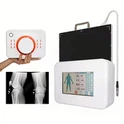
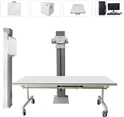
The shift from film-based or Computed Radiography (CR) to Digital Radiography (DR) is the most significant milestone in imaging history. Modern DR systems utilize advanced Flat Panel Detectors (FPDs) that convert X-rays directly into digital signals.
Superior Spatial Resolution: Latest detectors offer higher pixel density, allowing clinicians to see micro-fractures and subtle tissue changes that were previously invisible.
Instant Image Availability: By eliminating chemical processing, DR systems provide real-time results, allowing for immediate diagnostic intervention in emergency settings.
Dynamic Range: Modern sensors can capture a wider spectrum of bone and soft tissue densities in a single exposure, reducing the need for repeat scans.
2. Artificial Intelligence: The Silent Diagnostic Partner
AI is no longer a futuristic concept; it is an integrated component of modern X-ray workflows. The latest innovations leverage Deep Learning algorithms to act as a sophisticated "second opinion."
Automated Lesion Detection
AI-powered software can now scan chest X-rays for signs of pneumonia, tuberculosis, or lung nodules with an accuracy rate exceeding 90%. These systems highlight "areas of interest," ensuring that radiologists do not overlook subtle anomalies during high-volume shifts.
Image Noise Reduction
Through Iterative Reconstruction and AI denoising, machines can now produce crystal-clear images even when using significantly lower radiation doses. This is particularly crucial for pediatric patients and those requiring frequent follow-up scans.

3. Dose Optimization and Patient Safety
Enhancing diagnostic accuracy is not just about the image; it's about the safety of the process. Reference to the ALARA (As Low As Reasonably Achievable) principle has led to the development of "Smart Dose" technologies.
Automated Exposure Control (AEC): Sensors automatically adjust the radiation intensity based on the patient's body habitus, ensuring optimal image quality without unnecessary exposure.
Virtual Collimation: Clinicians can now adjust the field of view on a digital preview without triggering additional X-ray pulses, protecting sensitive organs from scatter radiation.
4. Portability and the Rise of Point-of-Care (POC) Imaging
One of the most practical innovations is the miniaturization of high-powered X-ray generators. Mobile X-ray units now offer the same diagnostic power as fixed room installations.
Bedside Diagnostics: For patients in the ICU or those with limited mobility, portable units bring the "imaging department" to the bedside.
Wireless Connectivity: Modern mobile units sync instantly with the hospital's PACS (Picture Archiving and Communication System), allowing a specialist across the globe to review an image within seconds of it being taken.
5. Spectral and 3D Tomosynthesis: The Depth of Detail
Traditional X-rays are 2D representations of 3D objects, which can lead to "overlap" errors. Latest innovations like Digital Breast Tomosynthesis (DBT) and Dual-Energy X-ray are solving this.
Multi-Angle Imaging: By taking a series of low-dose images from different angles, machines can reconstruct a 3D-like view, allowing doctors to "peel back" layers of tissue.
Material Differentiation: Dual-energy X-rays can distinguish between calcium and soft tissue more effectively, which is vital for cardiovascular and orthopedic diagnostic accuracy.
Summary Table: Key Innovations vs. Clinical Impact
| Innovation | Core Function | Impact on Accuracy |
| Flat Panel Detectors | High-speed digital capture | Higher resolution & lower retake rates |
| AI Algorithms | Pattern recognition | Reduced human error & faster triage |
| Smart Dose Tech | Auto-modulation | Optimized image contrast & safety |
| Tomosynthesis | 3D reconstruction | Elimination of tissue overlap |

Conclusion: Setting a New Standard for Patient Care
The latest innovations in X-ray technology represent a paradigm shift in medical diagnostics. By combining higher image resolution with AI-driven analysis and improved patient safety protocols, modern X-ray machines are empowering clinicians to make more informed decisions faster than ever before.
As these technologies become more widespread, the gap between "uncertainty" and "diagnosis" continues to shrink, ensuring that patients receive the most accurate and timely care possible.