
Understanding the Importance of Mortuary Freezers
Mortuary freezers are vital in preserving the dignity of the deceased. They ensure bodies are kept at optimal temperatures before burial or cremation. These specialized freezers are crucial in cold chain logistics, maintaining a consistent environment to prevent decomposition.
Proper service and maintenance of mortuary freezer doors are essential. This ensures efficiency and extends the equipment's lifespan. Regular checks help avoid unexpected breakdowns, which can disrupt operations.
Mortuary freezers come in various sizes and configurations. They cater to the diverse needs of funeral homes, hospitals, and morgues. Energy efficiency and compliance with health regulations are key considerations in their design.
Advancements in technology have improved mortuary freezers' functionality. They now feature user-friendly interfaces and reliable temperature monitoring systems. These innovations enhance the overall operations of facilities handling deceased individuals.
What Is a Mortuary Freezer?
A mortuary freezer is a specialized cold storage unit. It is designed to preserve deceased bodies until burial or cremation. By keeping a consistent, low temperature, it significantly slows down decomposition.
These freezers offer several key features:
Precision temperature control
Easy-to-clean surfaces
Durable construction to withstand frequent use

Mortuary freezers are common in hospitals, mortuaries, and funeral homes. They come in different types to fit specific needs and spatial constraints. Smaller units suit individual storage, while larger systems can handle multiple bodies. This variety is essential for customizing solutions to different facility requirements.
The Role of Mortuary Freezers in Cold Chain Logistics
Mortuary freezers play a crucial role in cold chain logistics. They ensure that deceased bodies are stored at a consistent temperature. This is vital for preserving their condition over time.
Efficient cold chain logistics prevent premature decomposition. Mortuary freezers are central to maintaining the required temperatures at all times. They help ensure the process runs smoothly from place to place.
Key aspects of their role include:
Maintaining a stable environment
Enabling safe transportation
Minimizing human error
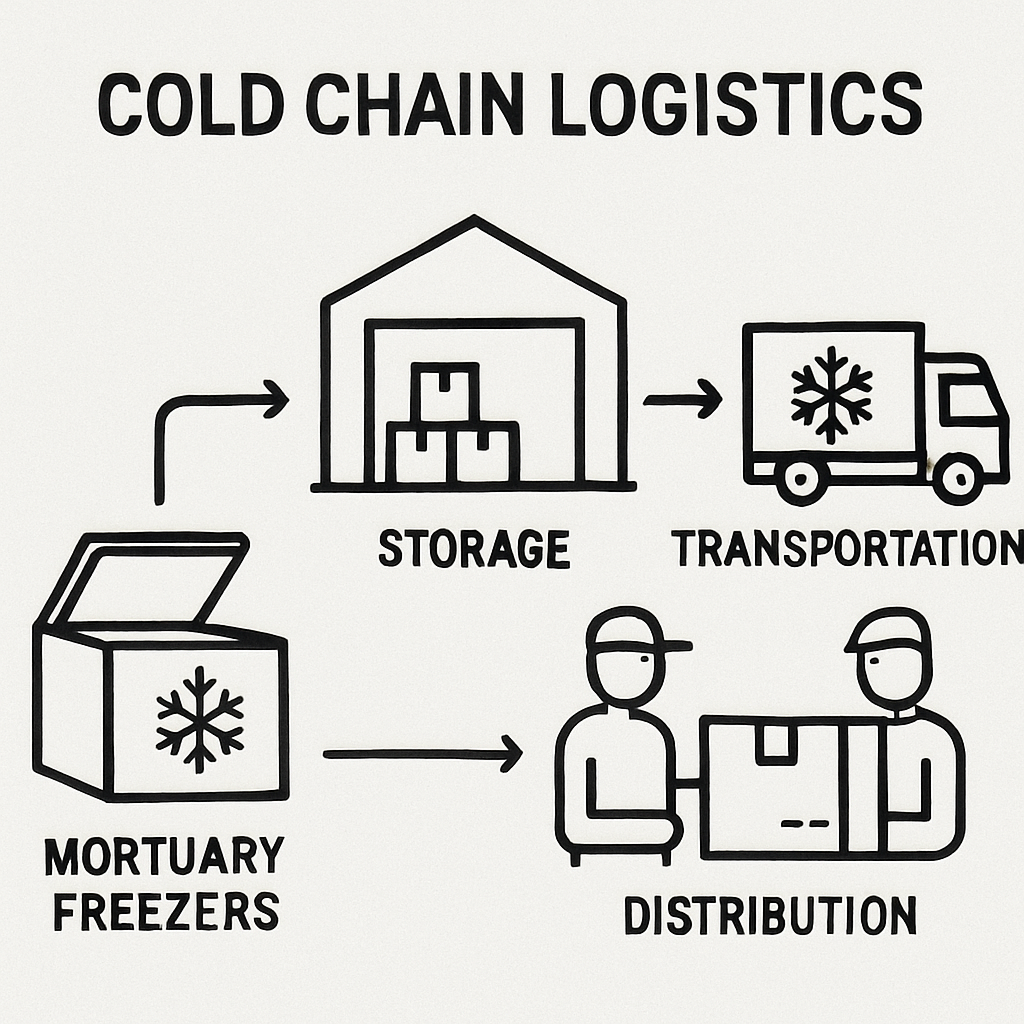
In transportation, these freezers are indispensable. They ensure bodies remain uncontaminated during transfers. Furthermore, temperature monitoring systems in these freezers provide accuracy and alerts in case of fluctuations. By doing so, they help ensure logistical needs are consistently met, aligning with health and safety standards.
Key Features and Types of Mortuary Freezers
Mortuary freezers come in various designs to fit different facility needs. They are equipped with features that enhance functionality and reliability. Each type serves a distinct purpose depending on the requirements.
Some freezers are energy-efficient, helping to reduce operational costs. This aspect is vital for facilities looking to minimize their environmental footprint. Also, advanced temperature control systems ensure precise conditions.
Common features of mortuary freezers include:
Temperature monitoring systems
Durable construction materials
Easy-to-clean surfaces
Customizable configurations

There are several types, such as single-compartment and multiple-compartment models. Facilities choose based on space and volume needs. Customization options are also available for specific constraints.
Large morgues may opt for walk-in mortuary freezers. These types accommodate several bodies simultaneously. Versatile and robust, they serve high-capacity demands effectively.

Selection depends on both current demand and future growth potential. By aligning freezer types with facility requirements, operations can proceed smoothly and efficiently.
Importance of Proper Service and Maintenance
Proper service and maintenance are vital for the efficiency of mortuary freezers. Regular check-ups help prevent unexpected breakdowns. Such proactive steps extend the lifespan of the equipment.
Ignoring maintenance can lead to temperature inconsistencies. This risks compromising the preservation of the deceased. Therefore, routine inspections are essential for consistent performance.
Key aspects of maintenance include:
Checking seals and insulation
Calibrating temperature controls
Cleaning both interior and exterior surfaces
Testing alarm systems

Mortuary freezer doors require extra attention. Well-functioning doors ensure optimal temperature control. They also reduce the energy required to maintain the set environment.
Staff should be trained to spot signs of wear. Early detection of issues can save time and expense. Investing in proper service and maintenance ensures reliability and safety in operations.
Compliance, Safety, and Staff Training
Adhering to compliance and safety standards is paramount for mortuary freezers. Regulations ensure that all equipment operates within safe parameters. This protects the integrity and dignity of the deceased.
Staff training is equally crucial. It ensures that personnel understand operational protocols. Knowledge of compliance requirements enhances overall facility management.
Training programs should cover several key areas:
Safe operation of freezer equipment
Understanding health and safety regulations
Procedures for monitoring temperatures
Protocols for emergency situations
Regular training updates keep staff informed of the latest regulations. This proactive approach minimizes risks and enhances safety. Ensuring compliance and proper training is an investment in the facility's reputation and operational efficiency.
Innovations and Trends in Mortuary Freezer Technology
Recent advancements in technology have significantly enhanced mortuary freezers. These innovations improve both functionality and reliability. Facilities can now operate more efficiently than ever before.
A major trend is the integration of smart technology. Many modern mortuary freezers come with user-friendly interfaces and remote monitoring capabilities. This allows for real-time temperature control and immediate alerts if conditions deviate from safe parameters.
Another development is in energy efficiency. New designs focus on reducing power consumption while maintaining optimal performance. This not only cuts operational costs but also lowers the environmental impact of facilities.
Key innovations include:
Smart temperature monitoring
Eco-friendly designs
Enhanced user interfaces

Choosing the Right Mortuary Freezer for Your Facility
Selecting an appropriate mortuary freezer is crucial for efficient operations. Every facility has unique needs that influence this decision. Consider factors like size, energy efficiency, and available space.
A well-chosen freezer can affect service quality and costs. It's important to evaluate the features that align with your facility's operations and budget constraints. Conduct thorough research and consider input from staff.
Key considerations include:
Size and capacity
Energy consumption
Required features
Budget limits
Finding the right freezer ensures you meet your facility's demands and operational goals efficiently.
Conclusion: The Critical Role of Mortuary Freezers
Mortuary freezers play a vital role in preserving dignity and ensuring safety. They are essential components of any facility handling deceased individuals, providing much-needed storage solutions.
These units help manage the logistical challenges that facilities face, especially during high-demand periods. In addition, the advances in technology and focus on proper maintenance help optimize their functionality. Investing in reliable mortuary freezers not only supports operational efficiency but also upholds the standards of care and respect essential in this sensitive industry.