
Exploring Different Types of Endoscopes
Endoscopes are vital tools in modern medicine. They allow doctors to see inside the body without large incisions.
These instruments have revolutionized diagnostics and treatment. They offer a less invasive option compared to traditional surgery.
There are two main types: flexible endoscopes and rigid endoscopes. Each serves different purposes in medical procedures.
Flexible endoscopes are used for navigating through winding passages. Rigid endoscopes provide a stable platform for surgical tools.
Understanding the types of endoscopes is crucial for medical professionals. It helps in choosing the right tool for each procedure.
What Is an Endoscope?
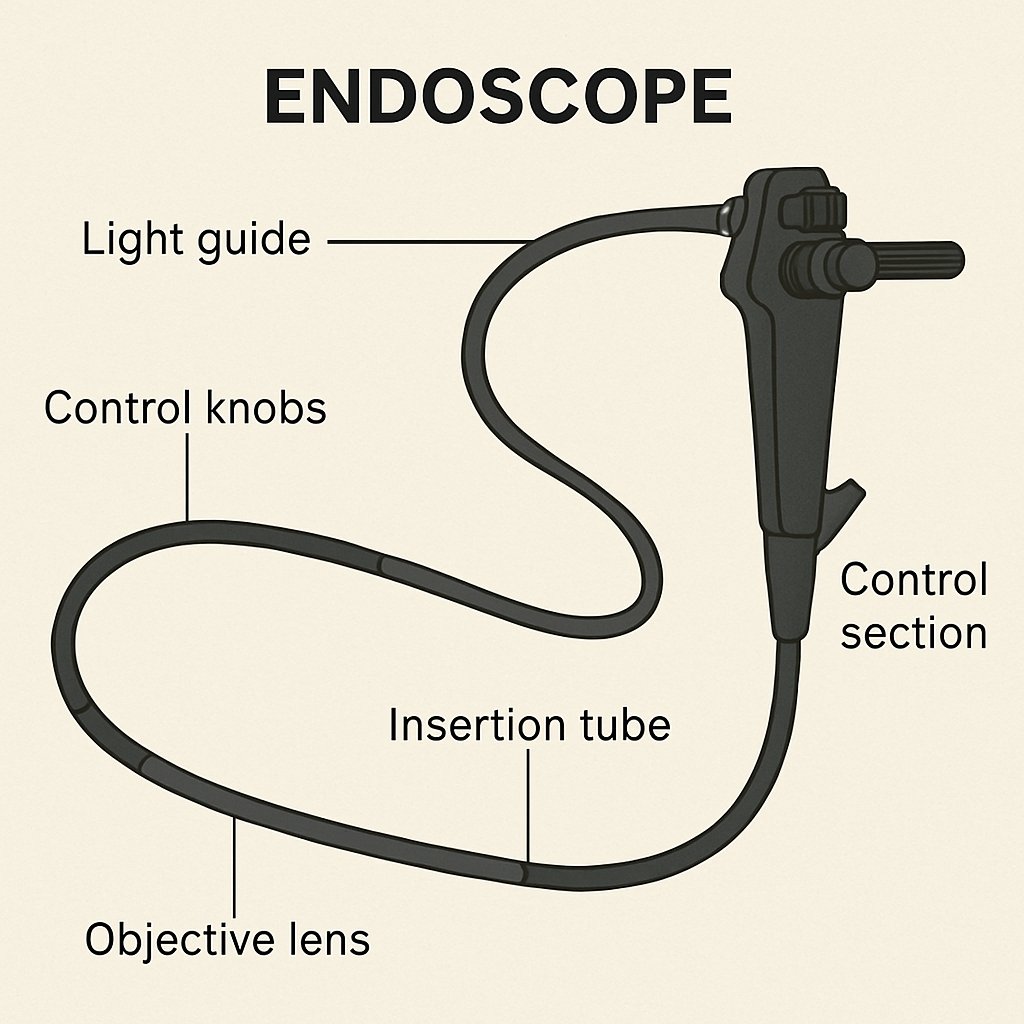
An endoscope is a medical instrument used to examine the interior of a hollow organ or cavity of the body. It helps in diagnosing conditions and performing certain surgeries without large cuts.
Endoscopes are equipped with a light source and a camera. This allows doctors to see clear images of internal organs on a monitor.
Key features of endoscopes include:
High-definition cameras
Light sources for visibility
Channels for surgical tools
The design can vary depending on the procedure. This makes them versatile diagnostic tools.
The Evolution and History of Endoscopes
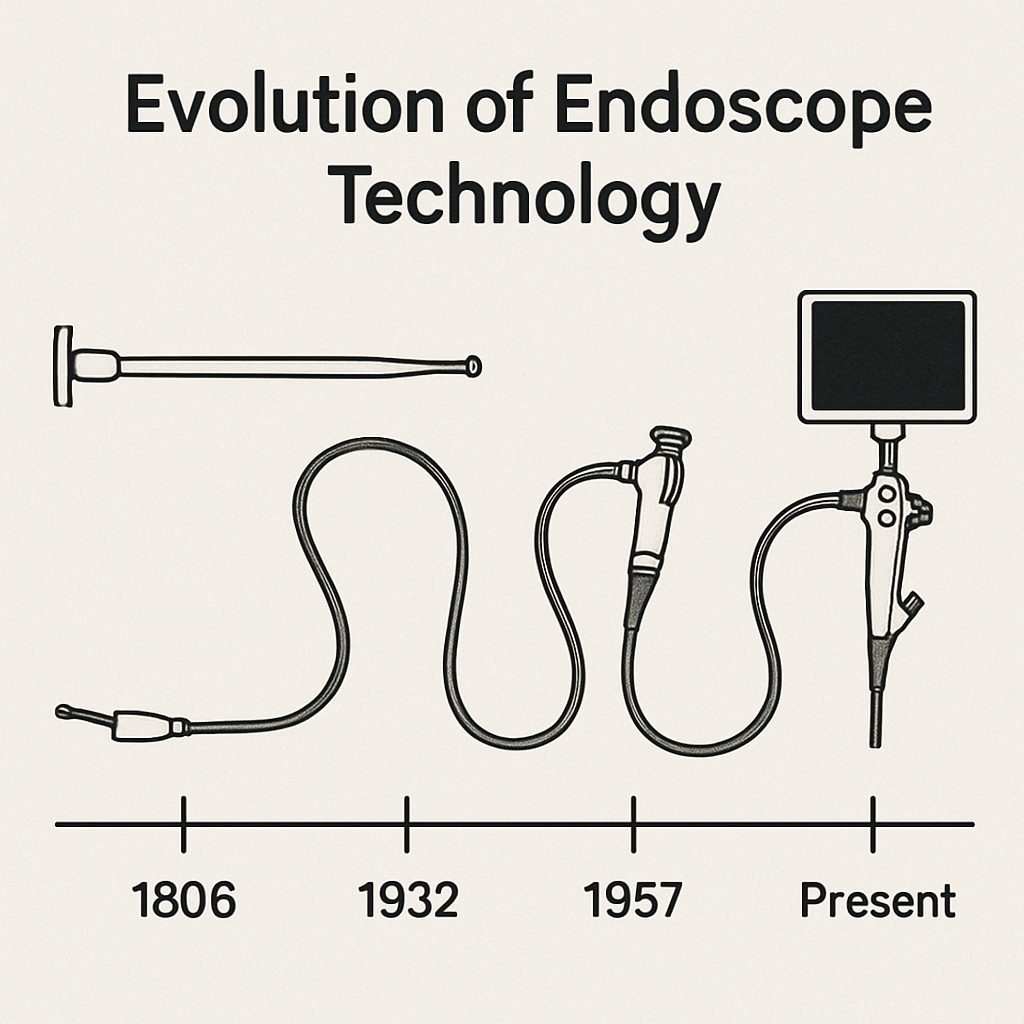
The history of endoscopes stretches back to the early 19th century. Initial designs were rudimentary, made with basic tubes and light sources. Over time, technological advances transformed endoscopes into sophisticated, essential medical tools.
Key milestones in endoscopy development include:
1806: Introduction of the Lichtleiter
1932: First flexible gastroscope
1960s: Fiber-optic technology integration
These advancements have revolutionized patient care. Endoscopes now support minimally invasive surgery, dramatically improving recovery times.
Main Types of Endoscopes: Flexible vs. Rigid
Endoscopes are primarily categorized into two types: flexible and rigid. Each type is tailored for different medical procedures. The choice between them depends on the specific needs of the examination.
Flexible Endoscopes
Flexible endoscopes are constructed from a pliable tube, allowing navigation through the body's intricate passages. These endoscopes are widely used for gastrointestinal procedures, such as colonoscopies and gastroscopies.
Their flexibility facilitates access to otherwise unreachable areas, enhancing diagnostic accuracy. They are equipped with channels that allow instruments to perform biopsies or remove polyps.
Flexible endoscopes are vital in modern medicine, offering precision and patient comfort. Their design allows bending around curves, crucial for internal examinations.
Key characteristics include:
Bendable tube
Used in gastrointestinal procedures
Channels for instruments

Rigid Endoscopes
Rigid endoscopes feature a straight, inflexible design that provides a stable platform for surgery. They are commonly used in arthroscopy and laparoscopy.
These endoscopes are ideal for examining areas accessible through straight pathways. They offer a sturdy guide for surgical instruments during procedures. Rigid endoscopes excel in providing clear, detailed images, vital for precision in operations.
Their construction supports tools for tissue removal, thus aiding in therapeutic procedures. They remain a cornerstone for surgeries in several specialties.
Core features include:
Straight tube construction
Useful for joint and abdominal procedures
Support surgical tools

Specialized Types of Endoscopes and Their Uses
Endoscopic technology has branched into specialized variants, each crafted for specific medical tasks. Capsule endoscopy, endoscopic ultrasound, and other unique endoscopes have revolutionized patient care. These specialized types expand the capability of medical professionals.
Specialized endoscopes cater to distinct diagnostic and therapeutic requirements. Their design allows access to varied bodily regions, each tailored to specific medical challenges. They enhance traditional medical practices, providing innovative solutions.
For example, capsule endoscopy enables non-invasive evaluation of the small intestine. Meanwhile, endoscopic ultrasound combines sound waves and visual technology for detailed imaging. Such advancements have broadened endoscopic application, offering options for different patient needs.
Common specialized endoscopes include:
Capsule endoscopy
Endoscopic ultrasound (EUS)
ERCP (Endoscopic retrograde cholangiopancreatography)
Bronchoscope
Arthroscope

Capsule Endoscopy
Capsule endoscopy introduces a swallowable device containing a camera. This tiny capsule travels through the digestive system, capturing detailed images. It is particularly effective for observing the small intestine, inaccessible to traditional endoscopes.
The non-invasive approach reduces patient discomfort and eliminates hospital stays. This breakthrough has greatly improved gastrointestinal diagnostics.

Endoscopic Ultrasound (EUS)
Endoscopic ultrasound merges endoscopy with ultrasound imaging, offering detailed insights into internal structures. It is especially useful in visualizing the digestive tract and surrounding organs.
EUS provides high-resolution images necessary for diagnosing certain conditions and guiding interventions. This technology is a game-changer in accurately assessing complex medical cases.

Other Notable Types (ERCP, Bronchoscope, Arthroscope, etc.)
Several other endoscopes cater to specialized needs. ERCP is used for examining pancreatic and bile ducts. Bronchoscopes provide a view of the airways and lungs, crucial for respiratory evaluations.
Arthroscopes are tailored for joint examinations, offering insights into joint health. Each serves a unique purpose in enhancing healthcare effectiveness.
Distinct functions include:
ERCP for bile and pancreatic ducts
Bronchoscope for airway assessments
Arthroscope for joint evaluations

How Endoscopes Work: Key Features and Technology
Endoscopes are marvels of medical technology, designed for precision and flexibility. They incorporate advanced features to achieve diagnostic and therapeutic tasks effectively. These instruments are indispensable in modern medicine.
Central to their function are the camera and light source, which provide clear visualization of internal organs. The camera transmits images to an external screen, allowing practitioners to navigate and diagnose accurately. This technology minimizes the need for invasive surgical procedures.
In addition, many endoscopes include channels for surgical tools, enhancing their therapeutic potential. They often feature:
High-definition cameras for precise imaging
Articulated tubes in flexible endoscopes for navigation
Channels for surgical tools

Endoscopes in Different Medical Specialties
Endoscopes are versatile tools, integral to a variety of medical fields. Their applications span several specialties, significantly enhancing diagnosis and treatment options. The adaptability of endoscopes makes them essential across many procedures.
In the medical world, endoscopes are indispensable. They contribute to fields such as:
Gastroenterology
Urology
Orthopedics
These tools allow doctors to perform detailed examinations, enabling early detection of diseases. Each specialty utilizes specific endoscope types tailored to its unique demands.

Benefits of Endoscopic Procedures
Endoscopic procedures offer numerous advantages, making them preferred choices in many medical scenarios. Their minimally invasive nature results in quicker recovery times and reduced discomfort.
These procedures also tend to:
Lower infection risks
Reduce hospital stays
Decrease complication rates
Patients generally benefit from less pain and faster return to normal activities. Moreover, endoscopic procedures enable doctors to perform precision diagnostics and surgeries with less impact on patients' bodies.

Challenges and Considerations in Endoscopy
Endoscopic procedures, despite their many benefits, are not without challenges. Proper handling and maintenance of endoscopes are critical to prevent damage and ensure patient safety.
Considerations for endoscopy include:
Training and skill requirements
Equipment sterilization to prevent infections
High equipment cost
These factors highlight the need for skilled professionals and stringent protocols to maintain the efficacy and safety of endoscopic practices.
The Future of Endoscopic Technology
Endoscopic technology is rapidly advancing, offering promising developments for medical professionals. Innovations like artificial intelligence and robotic assistance are enhancing precision and diagnostic capabilities.
Key advancements include:
Integration of AI for better diagnoses
Development of robotic-assisted endoscopy
Enhanced imaging techniques

These innovations will potentially lead to less invasive procedures and better patient outcomes, transforming healthcare delivery. As technology evolves, endoscopy will likely become even more essential.
Conclusion: The Impact of Endoscopes on Modern Medicine
Endoscopes have revolutionized medical diagnostics and treatments. Their minimally invasive nature means quicker recoveries and reduced risks for patients. They also provide unprecedented views inside the human body, enhancing our understanding and management of diseases.
As endoscopic technology continues to advance, its role in healthcare will undoubtedly expand, paving the way for even more innovative medical procedures and improved patient outcomes.