
The Definitive Guide to Selecting the Right Medical X-Ray Machine for Your Facility
In the modern healthcare landscape, diagnostic speed and accuracy are paramount. The cornerstone of radiology remains the medical x-ray machine. However, the technology powering these essential tools has evolved dramatically over the last decade, moving away from analog film and computed radiography (CR) toward sophisticated Digital Radiography (DR) systems.
For hospital administrators, radiologists, and clinic owners, purchasing a new medical x-ray machine is a significant capital investment. It is not just about buying hardware; it's about investing in patient safety, diagnostic confidence, and operational workflow.
This guide analyzes the current market landscape, drawing insights from industry leaders, to help you navigate the complexities of choosing the ideal imaging solution for your specific needs.

The Shift to Digital Radiography (DR)
Before diving into machine types, it is crucial to understand the technology standard. Top-tier medical facilities have largely transitioned to full Digital Radiography (DR).
Unlike older CR systems that require cassette handling and processing time, modern medical x-ray machines equipped with DR flat-panel detectors provide near-instantaneous image acquisition. The image appears on the technician's screen within seconds. This shift offers undeniable advantages:
Increased Throughput: Faster examinations mean more patients served per day.
Superior Image Quality: Advanced image processing software enables better tissue visualization.
Lower Radiation Dose: Highly sensitive DR detectors often require less radiation to produce quality images compared to older technologies.

Categorizing Medical X-Ray Machines: Finding Your Fit
One size does not fit all in medical imaging. The "best" machine depends entirely on your facility's patient volume, available space, and clinical focus.
1. Fixed X-Ray Rooms (Floor-Mounted and Ceiling-Suspended)
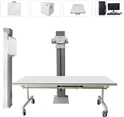
For high-volume radiology departments, emergency rooms, and busy orthopedic centers, a fixed digital radiography room is the gold standard.
Best For: General radiography, high patient throughput, and complex exams requiring various patient positions (standing, lying down).
Key Features: These systems offer the highest power generators (ensuring penetration for larger patients), auto-positioning capabilities, and robust tables designed for heavy use. Ceiling-suspended tubes offer maximum flexibility for easier patient access and trauma imaging.
2. Mobile and Portable X-Ray Machines
The demand for point-of-care imaging has skyrocketed. Portable x-ray devices bring diagnostics directly to the patient's bedside, whether in the ICU, NICU, or even in home-health settings.
Best For: Bedside imaging, facilities with limited space, mobile clinics, and veterinary practices.
Key Features: Modern portables are incredibly compact, lightweight, and battery-powered. When paired with wireless DR detectors, they offer "imaging on the go" without significantly compromising image quality.
3. C-Arm Systems (Surgical Fluoroscopy)
A C-arm is a specialized medical x-ray machine designed primarily for intraoperative use. Its unique "C" shape allows the tube and detector to rotate around the patient during surgery, providing real-time fluoroscopic (moving) images.
Best For: Operating rooms, pain management clinics, orthopedics, and vascular surgery.
Key Features: The focus here is on real-time imaging, vascular software packages, and minimizing dose during lengthy procedures.

Key Factors to Evaluate Before You Buy
When comparing quotes from medical imaging equipment suppliers, go beyond the price tag. Evaluate these critical performance metrics based on current industry standards.
1. Image Quality and Processing Software
The hardware gets the raw data, but the software makes it usable. Look for a medical x-ray machine that comes with advanced image processing algorithms. Features like automatic image stitching (for long-leg or full-spine views), bone suppression, and grid-less imaging software can significantly enhance diagnostic confidence.
2. Radiation Dose Management
Patient safety is non-negotiable. Top-ranking equipment providers prioritize "ALARA" (As Low As Reasonably Achievable) principles. Ensure the system includes:
Dose Area Product (DAP) meters.
Pediatric protocols.
Virtual collimation (adjusting the x-ray field without using radiation).
3. Workflow and Connectivity (PACS integration)
How easily does the machine fit into your existing digital ecosystem? A modern digital radiography system must integrate seamlessly with your Picture Archiving and Communication System (PACS) and Radiology Information System (RIS). DICOM compatibility is essential for smooth data transfer, storage, and retrieval.
4. Vendor Support and Service Contracts
An x-ray machine is only valuable when it is operational. Downtime costs money and disrupts patient care. When choosing a supplier, investigate their post-sales support structure. Do they have local service engineers? What is their guaranteed response time? Are software updates included in the service contract?
Conclusion
Investing in the right medical x-ray machine is a balancing act between clinical needs, budget constraints, and future-proofing your facility. By focusing on DR technology, understanding the distinct advantages of fixed versus portable systems, and prioritizing dose management and workflow integration, you can make an informed decision that benefits both your staff and your patients.