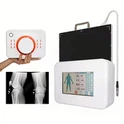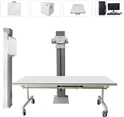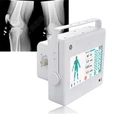

For over a century, medical X-ray equipment has been a cornerstone of diagnostic and therapeutic medicine. From its early days of rudimentary imaging to the sophisticated systems of today, X-ray technology has undergone significant transformations. These advancements have not only enhanced diagnostic capabilities but also improved patient safety and comfort. As technology continues to evolve, the role of X-rays in healthcare is set to expand even further. This article explores the latest trends in medical X-ray machines and their potential impact on the future of medical imaging.
Enhanced Image Clarity
One of the most notable advancements in X-ray technology is the significant improvement in image clarity. Modern X-ray machines utilize advanced digital imaging techniques to produce high-resolution images that were previously unattainable with traditional film-based systems. This enhancement allows for the detection of even the smallest anomalies, such as microcalcifications in mammography or hairline fractures in bone imaging, which were often missed with older technology.
Key Innovations in Image Clarity:
High-Definition Detectors: The development of high-definition flat panel detectors (FPDs) has revolutionized image quality. These detectors offer superior spatial resolution, which is crucial for detailed anatomical visualization.
Digital Radiography (DR): DR systems convert X-rays into digital signals, allowing for immediate image viewing and manipulation. This eliminates the need for film processing, speeds up diagnosis, and reduces costs.
Contrast Enhancement: Techniques such as dual-energy X-ray absorptiometry (DEXA) and spectral imaging improve contrast resolution, enabling better differentiation between tissues with similar densities.
Enhanced image clarity not only facilitates more accurate diagnoses but also aids in the early detection of diseases, ultimately leading to better patient outcomes.
Reduced Radiation Exposure
A critical area of focus in the evolution of X-ray technology is the reduction of radiation exposure. Traditional X-ray systems expose patients and healthcare providers to ionizing radiation, which carries inherent risks. Innovations in this field aim to mitigate these risks by developing systems that require lower radiation doses without compromising image quality.
Strategies for Reducing Radiation Exposure:
Advanced Dose Control: Modern X-ray machines incorporate automatic exposure control (AEC) systems that adjust the radiation dose based on the patient's size and the area being imaged. This optimizes the dose while maintaining image quality.
Improved Detector Sensitivity: Enhanced sensitivity of digital detectors allows for lower radiation doses to achieve the same image quality as higher doses in older systems.
Iterative Reconstruction Techniques: These algorithms reduce noise and enhance image clarity at lower radiation doses, making them particularly useful in CT imaging.
Reducing radiation exposure is crucial for minimizing the long-term risks associated with repeated imaging, especially in vulnerable populations such as children and pregnant women.
Mobile X-Ray Solutions
The advent of portable X-ray machines represents a significant trend in the medical field. These devices are designed to be compact and lightweight, making them ideal for use in various settings where traditional, stationary X-ray equipment is impractical.
Advantages of Mobile X-Ray Machines:
Portability: Portable X-ray units can be easily transported to the patient's location, whether in emergency departments, intensive care units, or remote healthcare facilities.
Rapid Deployment: These machines are invaluable in emergency scenarios, such as disaster response or military applications, where rapid diagnostic imaging is required.
Flexibility: Mobile X-ray systems offer a range of functionalities, from basic radiography to advanced imaging techniques like digital radiography and fluoroscopy.
The flexibility and convenience of mobile X-ray solutions improve patient care by providing timely imaging services without the need for patient transport, which can be challenging or risky in critical situations.
Advancements in 3D Imaging
Three-dimensional (3D) imaging is transforming the landscape of medical X-ray technology. Unlike traditional two-dimensional images, 3D imaging provides a comprehensive view of the patient's anatomy, offering detailed insights into complex structures.
Benefits of 3D Imaging:
Enhanced Anatomical Visualization: 3D imaging is particularly beneficial in fields like orthopedics and dentistry, where it provides detailed views of bone structures, aiding in the diagnosis and treatment of fractures, joint disorders, and dental issues.
Surgical Planning: Surgeons can use 3D images to plan and navigate complex surgical procedures, improving precision and outcomes.
Minimally Invasive Procedures: 3D imaging supports minimally invasive techniques by providing real-time, detailed views of internal structures, reducing the need for exploratory surgery.
The integration of 3D imaging into X-ray technology marks a significant leap forward, offering new possibilities for diagnosis and treatment across various medical disciplines.
Integration of Artificial Intelligence
The incorporation of artificial intelligence (AI) into medical X-ray machines is a groundbreaking development with the potential to revolutionize diagnostic imaging. AI algorithms can analyze X-ray images with remarkable speed and accuracy, identifying patterns and anomalies that may not be immediately apparent to the human eye.
AI Applications in X-Ray Imaging:
Automated Image Analysis: AI can assist radiologists by providing preliminary reads of X-ray images, highlighting areas of concern and suggesting possible diagnoses.
Predictive Analytics: Machine learning models can predict disease progression and patient outcomes based on historical imaging data, aiding in early intervention and personalized treatment plans.
Workflow Optimization: AI can streamline radiology workflows by automating routine tasks, such as image sorting and report generation, allowing radiologists to focus on more complex cases.
The integration of AI in X-ray technology promises to enhance diagnostic accuracy, reduce interpretation time, and improve overall efficiency in radiology departments.
Looking Ahead
The journey of medical X-ray machines from their inception to the present has been remarkable, and the future holds even greater promise. Emerging trends such as enhanced image clarity, reduced radiation exposure, mobile X-ray solutions, advancements in 3D imaging, and the integration of AI are set to redefine the field of medical imaging. As these technologies continue to evolve, they will play a crucial role in advancing healthcare, improving patient outcomes, and expanding access to diagnostic services.
Future Directions in X-Ray Technology:
Quantum Imaging: Research into quantum imaging techniques may lead to even more precise and lower-dose imaging methods.
Telemedicine Integration: Mobile X-ray units equipped with advanced communication technologies will facilitate remote diagnostics and consultations, expanding access to high-quality medical care in underserved areas.
Personalized Imaging Protocols: AI-driven imaging protocols tailored to individual patient needs will optimize diagnostic accuracy and minimize exposure risks.
As healthcare technology progresses, the ongoing evolution of X-ray machines will continue to enhance the capabilities of medical professionals, ultimately leading to a new era of medical imaging and patient care.